If you are thinking about replacing one tooth, several teeth, or a whole arch, this post answers the key questions about dental implants by Winchester, VA. You’ll learn what implants are, how they work, who is a good candidate, the types of restorations, common procedures and technologies used for implant care, typical timelines, costs and financing, recovery and long-term care, and how to choose a provider. Read this if you worry about bone loss, want a stable chewing solution, or are comparing implants to bridges and dentures.
What are dental implants?
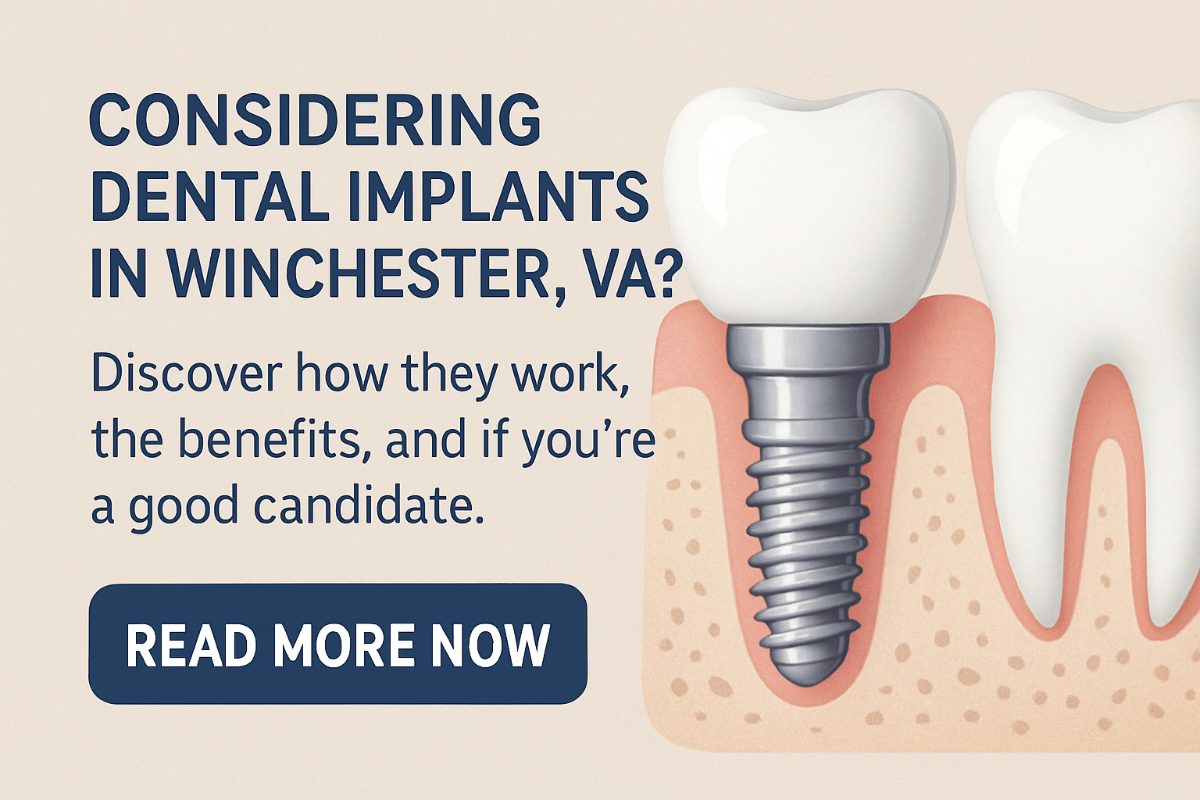
Dental implants are small titanium posts placed into the jaw to act like tooth roots. Through a process called osseointegration, the bone grows tightly around the implant, creating a stable foundation for a crown, bridge, or denture. Because implants replace the root, they help restore chewing and speech and reduce the bone loss that follows missing teeth. Modern implants mimic natural teeth in function and appearance.
How dental implants work and the main benefits
Implants support replacement teeth that look and feel like natural teeth. They let you chew more effectively than removable dentures and help maintain clear speech. By replacing the root, implants stimulate the jawbone and prevent the shrinkage that can change your facial shape. Implants are durable — with good care they often last decades — and they avoid the need to alter adjacent healthy teeth, which is sometimes required for bridges.
Who is a good candidate for dental implants by Winchester, VA
Oral health and bone requirements
Good candidates have healthy gums and enough jawbone to support implants. If bone volume is low because of long-term tooth loss or gum disease, bone grafting or a sinus lift may be needed to create a stable base. Your dentist or specialist will use imaging to measure bone and plan treatment.
Medical and lifestyle factors
Certain medical conditions and habits affect healing. Well-controlled diabetes is usually acceptable, but uncontrolled diabetes can slow healing and raise infection risk. Smoking reduces implant success and is often discouraged before and after surgery. Some medications and conditions that affect bone metabolism also require special planning. A full medical review helps determine candidacy.
Types of implant restorations
Single-tooth implant and crown
A single implant replaces one missing tooth with a crown. This is often the best option when a single tooth is lost because it preserves adjacent teeth and restores function and aesthetics.
Implant-supported bridge and partials
When several teeth in a row are missing, two or more implants can support a bridge. This avoids using natural teeth as anchors and can be more stable than traditional partials.
Implant-supported dentures and All-on-4 full-arch solutions
For patients missing most or all teeth, implant-supported dentures or All-on-4 use multiple implants to anchor a full arch of replacement teeth. All-on-4 places four strategically angled implants to support a fixed bridge, often reducing the need for extensive grafting. These options improve stability and chewing compared with removable dentures but require surgery and thorough planning.
Common procedures & technologies used for dental implants by Winchester, VA
Multi-dimensional imaging like CBCT scans lets clinicians see bone volume and nerve positions before surgery. Guided implant placement uses digital planning to place implants precisely. Bone grafting and sinus lifts rebuild bone when needed. Soft-tissue grafting improves gum health and aesthetics. Sedation options help anxious patients. After placement, regular periodontal maintenance supports long-term success and checks for early signs of problems.
Typical treatment timeline for dental implants by Winchester, VA
Treatment starts with a consultation and imaging. Any preparatory work—extractions, grafts, or treating gum disease—may take weeks to months to heal. Implant surgery is usually outpatient and takes one day per site to place the implant. Osseointegration typically requires 3–6 months for lower and upper jaws (varies by case). After healing, your custom crown, bridge, or denture is attached. Faster timelines may be possible with immediate loading in selected cases.
Costs and financing for dental implants by Winchester, VA
Cost depends on the number of implants, type of restoration (single crown vs. full arch), need for grafting or sinus lift, and imaging or sedation. Single-tooth implants typically cost more than a bridge upfront but last longer. Insurance may cover part of the restoration but often limits implant coverage. Many practices offer financing plans, third-party medical lenders, or in-office payment options to spread costs.
Recovery, risks, and long-term care
Expect mild to moderate soreness the first few days after surgery, managed with pain meds and cold packs. Full healing takes months. Risks include infection, poor integration, nerve injury, and peri‑implantitis (inflammatory bone loss around an implant). Good oral hygiene, quitting smoking, and regular periodontal check-ups are key to preventing problems. Routine professional cleanings and home care help implants last.
How to choose a provider for dental implants by Winchester, VA
Credentials and experience to look for
Look for a periodontist or implant-trained specialist with many implant cases and advanced imaging/technology. Board certification or specialist training and a portfolio of before-and-after cases indicate experience. A team approach with restorative dentists and specialists is ideal for complex full-arch work.
Questions to ask at your consultation
Ask about success rates, whether CBCT imaging is used, sedation options, experience with grafts and sinus lifts, follow-up care, warranties, and financing. Request to see case examples similar to your situation and ask who manages your restorative crown or denture after implant placement.
About NOVA Perio Specialists (light, nearby option)
NOVA Perio Specialists provides specialty periodontal and implant care with offices in Sterling, Leesburg, and Aldie. Their team of four experienced periodontists offers advanced services such as All-on-4, bone grafting, sinus lifts, soft‑tissue grafting, and CBCT-guided implant planning. Financing and individualized treatment planning are available to support complex cases and long-term oral health.
Next steps: scheduling a consultation for dental implants by Winchester, VA
Schedule an exam with a CBCT scan to evaluate bone and create a treatment plan. Bring a list of medications, medical history, and any dental records or recent X-rays. Ask about financing options and what to expect during recovery so you can plan time off work and support after surgery.
FAQ — dental implants by Winchester, VA
How long do implants last? With good care and regular maintenance, implants often last decades; many patients keep them for life. Will the implant placement hurt? Local anesthesia and sedation options make placement comfortable. You can expect soreness afterward that is manageable with medication. Can I get implants if I have gum disease? Active gum disease must be treated first. After periodontal health is achieved, implants may be possible with careful planning. How soon can I eat normally after implants? Soft foods are recommended for several days; full chewing on the new restoration is usually allowed after the final crown or denture is placed and healing is confirmed. What are my options for replacing many teeth? Options include implant-supported bridges, implant-retained dentures, or full-arch All-on-4 solutions. Your anatomy, budget, and goals guide the best choice.